Guerlain Nahema

In this review
In the grand tapestry of perfumery, certain creations are not merely scents but historical markers, olfactory pillars that define an era or an aesthetic. Guerlain's Nahema, launched into a world on the cusp of the bombastic 1980s, is one such creation. Unveiled in 1979, it was a fragrance born of both legend and technical audacity. Jean-Paul Guerlain, the last of the dynasty's master perfumers, sought to capture an impossible ideal: the very soul of a rose, in all its multifaceted, fiery, and often contradictory glory. It was a stark departure from the disco-era musks and green chypres, presenting instead a baroque, almost tumultuous floral that felt both classical in its ambition and shockingly futuristic in its execution.
The inspiration for Nahema is famously twofold. It draws from a tale in One Thousand and One Nights of twin princesses, the gentle Mahane and the fiery, passionate Nahema. Yet, its more immediate muse was the incandescent Catherine Deneuve, particularly her spirited performance in the 1975 film Le Sauvage. Guerlain envisioned a scent that could mirror her on-screen persona: beautiful, elegant, yet possessing an untamable, almost ferocious inner fire. This duality is the very heart of Nahema—a fragrance that is at once a photorealistic rose and an abstract, explosive reconstruction of its essence.
Positioned within the revered Guerlain patrimony, Nahema has always been something of an insider's classic. It never achieved the ubiquitous fame of Shalimar nor the commercial dominance of Samsara. Instead, it has cultivated a devoted following among connoisseurs and aficionados who recognize its artistic genius. It is a challenging composition, one that does not offer immediate gratification but rather demands contemplation. Its creation was a technical marvel, relying on a groundbreaking headspace technology and a novel CO2 extraction method to capture volatile rose molecules that were previously inaccessible, resulting in a scent of unprecedented dimension and vivacity.
Today, Nahema stands as a testament to an era when perfumery was driven by artistic vision rather than market research. It is a cultural touchstone for those who study the evolution of the rose in fragrance, a benchmark against which all other dramatic rose compositions are invariably measured. To experience Nahema is to engage with a piece of olfactory history, a complex and demanding work of art that continues to reveal new facets with every wear, much like the tempestuous princess for whom it was named.
The Nose Behind the Scent
Jean-Paul Guerlain, the last master perfumer of the Guerlain family dynasty. His illustrious portfolio includes other masterpieces such as Vétiver (1959), Habit Rouge (1965), and Samsara (1989).
Accords
Notes Pyramid
Scent Journey
A dramatic and startlingly green opening, characterized by a rush of metallic aldehydes and the sharp, bitter verdancy of hyacinth. A juicy, photorealistic peach note emerges quickly, providing a sweet counterpoint to the initial coolness.
The heart phase is an explosive, symphonic 'rose storm.' It presents a multifaceted rose that is simultaneously dewy, jammy, spicy, and honeyed. The complexity is deepened by creamy ylang-ylang and a tart, exotic whisper of passionfruit.
A magnificent, warm, and comforting conclusion. The fragrance settles into a velvety base of creamy sandalwood and sweet, resinous Peru balsam, with a classic touch of Guerlain vanilla. The rose remains, softened and beautifully integrated, a haunting presence on the skin.
Performance Dashboard
Exceptional longevity, lasting a full 10-12+ hours on skin and persisting on clothing for several days.
Projects powerfully for the first 3-4 hours, creating a commanding and noticeable aura. It is not a scent for close quarters.
Leaves a grand, opulent, and unforgettable trail that is characteristic of classic French perfumery at its finest.
When to Wear
Pros & Cons
- ✅ An undisputed masterpiece of perfumery
- ✅ The most complex and multifaceted rose scent ever created
- ✅ Extraordinary longevity and sillage
- ✅ A unique and unforgettable artistic statement
- ✅ Exudes sophistication and timeless elegance
- ❌ The sharp, aldehydic opening can be challenging for some
- ❌ May be perceived as 'dated' by those accustomed to modern fragrances
- ❌ Can be overpowering if not applied with discretion
- ❌ Not a safe blind buy due to its complexity and polarizing nature
Price & Value
“An essential investment for any serious collector or student of perfumery. The price reflects its artistic merit, historical significance, and exceptional quality.”
Reformulation History
Significant differences exist between the original Parfum Extrait (1979) and the current Eau de Parfum. The vintage Extrait is widely considered deeper, richer, and more complex, with a more pronounced animalic warmth. The modern EDP is brighter, more aldehydic, and more focused on the green and fruity facets, making it arguably more wearable but less dense than the original formulation.
Who It's For
Ideal For
- Connoisseurs of classic perfumery
- Individuals with a bold, sophisticated, and somewhat dramatic style
- Admirers of complex, artistic rose fragrances
- Ages 30 and up
Not Recommended For
- Those who prefer light, fresh, or simple gourmand scents
- Beginners in the world of niche or classic fragrances
- Anyone seeking a subtle or office-appropriate scent
The Family
Explore More
Similar Fragrances
 Portrait of a Lady
Maison Francis Kurkdjian
Portrait of a Lady
Maison Francis Kurkdjian
 Lyric Woman
Amouage
Lyric Woman
Amouage
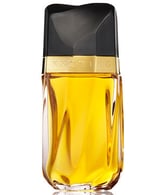 Knowing
Estée Lauder
Knowing
Estée Lauder
A more modern interpretation of a complex rose chypre, with a darker, more nocturnal feel.
Clone Alternatives
While not a clone, users note it shares a similar 1980s opulent, honeyed-rose chypre DNA at a more accessible price point.
Offers a similarly powerful, room-filling rose experience, but is far more linear and lacks Nahema's complexity and fruity-balsamic depth.
You May Also Enjoy
 Chanel No. 5
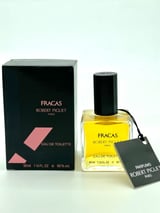 Robert Piguet Fracas
 Insolence
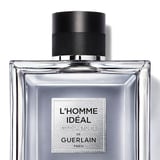 L'Homme Ideal Cologne Forte
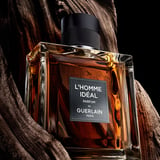 L'Homme Idéal le Parfum
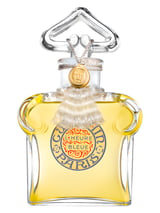 L'Heure Bleue (1912)
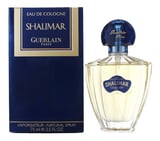 Shalimar (Original)
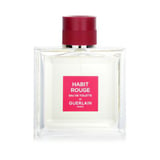 Habit Rouge Eau de Toilette (Original)
Layering Ideas
- A pure, high-quality sandalwood oil to enhance the creamy warmth of the drydown.
- A light application of a simple vanilla fragrance, such as Guerlain's Spiritueuse Double Vanille, to add a gourmand facet.
- A single spray of a vetiver scent to amplify the earthy, structural elements of the base.
Final Verdict
Nahema is not merely a perfume to be worn; it is an olfactory event to be experienced. It represents a pinnacle of artistic ambition from a legendary house, a fragrance born from a desire to capture not just the scent of a rose, but its very soul. To purchase Nahema is to acquire a piece of history, a testament to the power of perfumery as an art form. It is for the individual who seeks more than just a pleasant aroma—it is for the one who seeks emotion, narrative, and uncompromising beauty. In a world of fleeting trends, Nahema is an eternal statement of passionate, fiery elegance.